
Air Handling Unit in HVAC: Applications, Types, and Selection Tips
The Air Handling Unit (AHU) is a key component of modern HVAC systems, providing clean, conditioned, and humidity-controlled air. Connected to a building’s ductwork, it ensures indoor comfort, air quality, and energy efficiency. This article reviews the functions, types, and key considerations for selecting an AHU.
The content on this page is just a guest post and is prepared by someone else. Techdic does not assume any responsibility for this article, the content of the pages that are linked in this article, or the services related to them. We do not approve or reject them.
Air Handling Unit and Its Importance
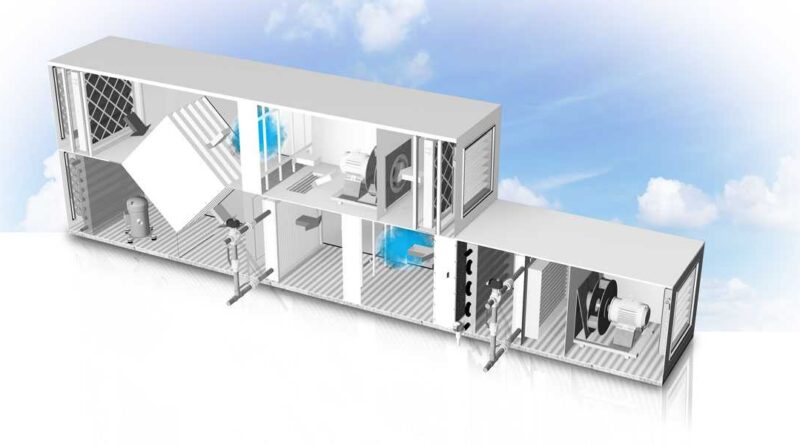
An air handling unit is designed to intake air, filter it, adjust temperature, regulate humidity, and distribute the treated air through ducts into the desired spaces. It does not produce cooling or heating itself; this is provided by external equipment like chillers and boilers supplying hot or chilled water to the AHU coils. The importance of the air handling system in HVAC lies in several key factors:
- Precise Temperature and Humidity Control:
By passing air through cooling and heating coils and using humidifiers or dehumidifiers, the AHU maintains optimal comfort levels in indoor environments. - Air Filtration and Indoor Air Quality (IAQ) Improvement:
Multiple filters in the AHU remove dust, particles, contaminants, and microorganisms, providing clean and healthy air. This is especially important in hospitals and laboratories. - Fresh Air Supply:
The AHU can draw in outdoor air, filter it, and condition it before supplying it indoors, ensuring a constant supply of oxygen and dilution of indoor pollutants. - Energy Efficiency:
With integrated heat recovery systems, air handling units can reclaim thermal energy from the exhaust air to preheat or precool incoming air, significantly reducing overall energy consumption.
Applications of Air Handling Units
Depending on their capacity and design, air handling units are used across a wide range of applications:
- Residential and Office Buildings:
Central air handling units are used in large residential complexes, towers, and office buildings to provide full-building air conditioning. - Commercial Centers:
Due to the high air volume and strict air quality requirements, shopping malls, restaurants, gyms, cinemas, theaters, and entertainment venues rely on an air handling unit to ensure a comfortable and healthy indoor environment. - Healthcare Facilities:
Hygienic air handling units with high-efficiency filtration and precise humidity control are essential for maintaining sterile conditions and preventing pathogen spread in operating rooms, isolation wards, and clean rooms. - Industrial Spaces:
In manufacturing plants and production areas, AHUs not only enhance employee comfort but also maintain the required environmental conditions for sensitive equipment and industrial processes. - Greenhouses:
Air handling units are used to regulate temperature and humidity levels precisely for optimal plant growth.
Although AHUs have filters to improve indoor air quality, in highly sensitive environments or when greater purification is needed, additional air purifiers can be used to remove microscopic particles and gaseous pollutants.
Types of Air Handling Units
Air handling units are classified based on several factors. The most common classifications include application, type of fan, and airflow direction or installation configuration.
Types of AHUs Based on Application
The most widely used types of air handling units include standard (comfort), hygienic, industrial, and heat recovery AHUs, and air washers.
Standard (Comfort) AHU
This type of air handling unit is designed to provide general air conditioning for residential, commercial, and office buildings, focusing mainly on thermal comfort.
Hygienic Air Handling Unit
These units have advanced filtration systems, including HEPA and ULPA filters, and specialized internal designs to prevent contamination buildup. They are used in highly sensitive environments like hospitals, laboratories, pharmaceutical facilities, and clean rooms.
Industrial AHU
Built with higher capacities and more durable structures, these units are designed for industrial environments and factories that require large air volumes and precise control of environmental parameters.
Heat Recovery AHU
These air handling systems use heat exchangers to recover thermal energy from the exhaust air and transfer it to the incoming fresh air for preheating or precooling, resulting in significant energy savings.
Air Washer
These systems use water spray as a cooling medium to both humidify and cool the air. An air washer is commonly used in hot and dry climates where humidity control is required.
Types of AHUs Based on Fan Configuration
In general, the fans in air handling units are categorized as draw-through or blow-through types.
- Draw-Through Fan:
The fan is located after the coils, pulling the air through them. This is the more common configuration and requires less space. - Blow-Through Fan:
The fan is placed before the coils, pushing the air across them. This setup may require more installation space.
Types of AHUs Based on Airflow Direction and Installation
Air handling units can also be categorized based on air discharge direction, such as upward, downward, or front discharge, as well as horizontal or vertical configurations.
Upward, Downward, and Front Discharge AHUs
This classification refers to the direction of conditioned air leaving the unit.
Horizontal and Vertical AHUs
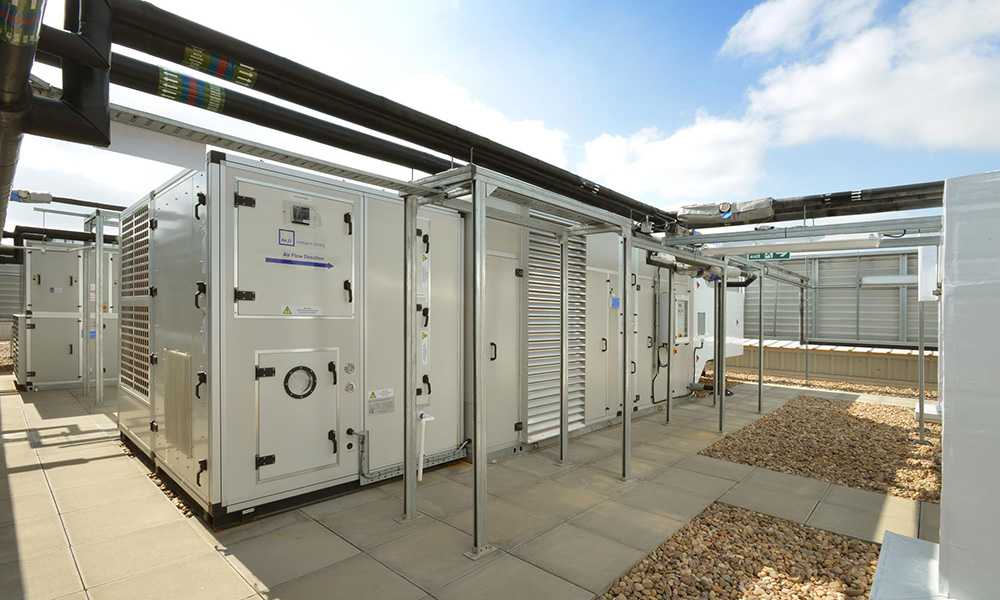
This refers to the unit’s physical orientation and installation method. Horizontal AHUs are commonly installed on rooftops or in mechanical rooms, while vertical air handling units are typically installed indoors.
Note:
In many projects, depending on requirements and budget, simpler systems like air washers can be used instead of advanced air handling units. Their cost-effectiveness and functionality make them a practical choice.
Key Points in Selecting an AHU: A Step-by-Step Guide
Designing and selecting an AHU requires precision and expertise to ensure the HVAC system operates efficiently with minimal energy consumption. Key factors to consider include:
Accurate Heating and Cooling Loads Calculation
The most crucial step is to accurately calculate the required cooling and heating loads of the space, considering factors such as:
- Area and function of the space: For example, a sports hall has different requirements compared to an office.
- Number of occupants: Each person generates a specific amount of heat.
- Electrical equipment: Devices such as computers, lighting systems, and appliances produce heat.
- Building insulation and materials: The quality of wall, roof, and window insulation directly affects heat gain and loss.
- Climatic conditions: Outdoor temperature range, humidity levels, and sun exposure hours are key design factors.
- Required fresh air volume: Determined based on indoor air quality standards.
Selecting the Right Type of AHU
The appropriate type of air handling system should be chosen based on the space’s intended use. For instance, hospitals require hygienic AHUs with advanced filtration and washable, disinfectable internal surfaces.
Choosing Filters for AHU
Filters are the most critical components in ensuring air quality. The type and number of filters (pre-filters, bag filters, HEPA, ULPA) depend on the pollution level of the intake air and the required air cleanliness for the application.
Cooling and Heating Coil Design
The coil capacity must match the calculated heating and cooling loads. The coil type (chilled water or DX), number of rows, and fin density all affect the heat transfer efficiency.
Selecting AHU Fan and Motor
The fan capacity and static pressure must be adequate to distribute air properly through ducts and overcome pressure drops from filters and coils. Using high-efficiency motors, such as EC motors with variable speed control via an inverter, can greatly optimize energy consumption.
Air Handling Unit Casing
The air handling units casing should be constructed from corrosion-resistant materials, such as galvanized or stainless steel, and properly insulated to prevent heat loss and reduce noise. Sandwich panels with polyurethane insulation are a suitable option.
Humidification and Dehumidification Systems
If humidity control is required, suitable systems (such as steam or ultrasonic humidifiers and dehumidifying coils) should be integrated into the AHU design.
Dimensions and Installation Location
The AHU dimensions must match the available installation space. The installation site should allow easy access for maintenance and servicing while minimizing noise disturbance.
Air Handling Units Control System
A smart Building Management System (BMS) can optimize the AHU operation according to varying indoor conditions, automatically adjusting temperature, humidity, and airflow to save energy.
Purchasing the Best Compatible Air Handling Unit – DamaTajhiz
As an essential component of HVAC systems, the air handling unit plays a vital role in providing comfort, healthy air, and energy efficiency in various buildings. Proper design and selection require understanding applications, AHU types, and technical parameters. Following these principles helps create a system that meets air conditioning needs while supporting sustainability and lowering costs. If you want to buy the best compatible AHU for your project, you can consult with DamaTajhiz HVAC Co. experts for free. DamaTajhiz Engineering Group, with over 22 years of experience under the supervision of engineer Majid Zavvarian, offers top AHU brands and free expert consultation. You can order HVAC equipment, including air washers, cooling towers, air handling units, water cooled and air cooled chillers, air curtains, burners, boilers, heat exchangers, gas heaters, unit heaters, pumps, filters, and storage tanks, from countries across Asia, the Middle East, and Europe, and have them delivered to your city (Manama, Baghdad, Dubai, Sharjah, Muscat, Riyadh, Jeddah, and Doha Amman, Sulaimaniyah, Sofia, Kirkuk, Islamabad, Mosul, Erbil, Dushanbe, Aleppo, Damascus, Baku, and Kabul) in the shortest possible time. Furthermore, you can ask any question in the HVAC area of expertise and receive a free consultation from our professional team members by calling +98-930-288-0251 or sending a WhatsApp message to this number.